
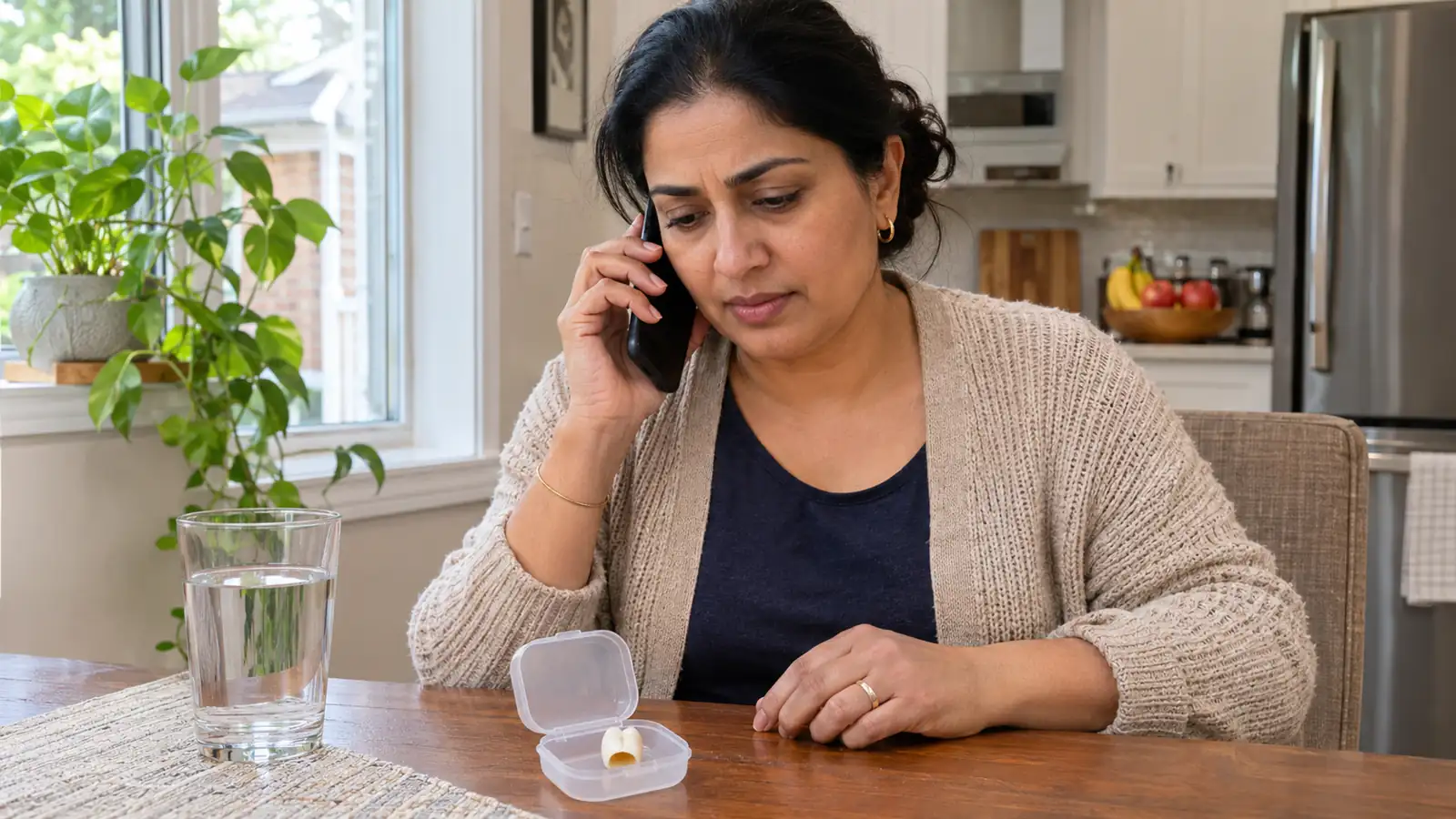
If a dental crown comes off, keep it in a clean container and call your dentist. Avoid chewing on the exposed tooth, and do not use household glue to put the crown back. Even if the tooth feels comfortable, it needs an assessment before the crown can be safely reused or replaced.
Tell the office immediately if you also have swelling, severe pain or bleeding. Difficulty breathing or swallowing, or rapidly spreading swelling, needs emergency medical care.
Start with the crown and the tooth
If the crown is already out of your mouth, set it aside somewhere safe and bring it to the appointment. Do not scrape out its inside or try to remove anything attached to it.
If it is still partly attached, avoid pulling or twisting it. Call the dental office for instructions. A loose crown may move further while you eat, so avoid chewing in that area until you receive advice.
You may be unsure whether you have lost a crown, a filling or part of the tooth itself. Describe what you can see without probing the area. The dentist can identify what happened.
For urgent advice from an emergency dentist in downtown Brampton, contact My Smile Dentistry. When you call, say that a crown has come off and explain any symptoms.
Is it an emergency if there is no pain?
A detached crown needs prompt dental advice, but the symptoms and condition of the tooth determine the timing of care. No pain does not mean the crown should be left off indefinitely.
The exposed tooth may be vulnerable to damage, and the dentist needs to find out why the crown came loose. It may be possible to reuse it, but that cannot be confirmed from how it looks in your hand.
When calling, mention:
- Whether the crown came off while eating or after an injury.
- Whether it was temporary or permanent.
- Whether the tooth hurts when you bite or reacts to temperature.
- Any swelling, bleeding, bad taste or sharp edge.
- Whether the crown contains a post or an attached piece of tooth.
Do not wait for pain to develop before making the call. If symptoms worsen after you have booked, update the office.
What should I avoid while waiting?
Do not glue the crown back yourself. A crown that feels as though it fits may still be seated incorrectly or cover a problem that needs treatment.
Avoid hard or sticky food around the tooth. Brush gently and do not pick at the exposed area. If hot or cold food causes discomfort, avoid the trigger until you can be assessed.
Ask the office before using a temporary dental cement or repair kit. Products sold for short-term use are not a substitute for examining the tooth, and they may not suit every situation.
For pain relief, ask a pharmacist or dental professional what is appropriate for you. Do not place aspirin against the gum, and do not take leftover antibiotics to treat the problem yourself.
The NHS Wales guide to a lost crown also advises keeping the crown safe and having the tooth assessed. For appointment arrangements, contact your local dental office in Brampton.
Can the dentist put the same crown back?
Sometimes a crown can be recemented. The dentist first needs to check that it is intact, fits appropriately and has a suitable tooth foundation.
A new crown or other treatment may be discussed if the crown is damaged, the tooth has decayed or fractured, or the fit is no longer acceptable. A crown coming off does not, by itself, tell you which situation applies.
My Smile Dentistry’s restorative dentistry services include crowns, fillings and other treatments for damaged teeth. Ask the dentist to explain the findings before deciding on a repair.
Useful questions include:
- What caused the crown to loosen?
- Can this crown be reused, and why or why not?
- Does the tooth need treatment before it is covered again?
- Will I need a temporary restoration?
- What are the expected costs and next appointments?
These questions can keep the conversation focused on fixing the cause, rather than simply covering the tooth again.
What if this is a temporary crown?
Contact the office that prepared the tooth and explain that the temporary crown has come off. Tell them when the permanent crown appointment is scheduled.
The temporary crown protects the prepared tooth between visits. Do not assume it can remain off until your existing appointment; the dental team can tell you whether it needs earlier attention.
If you are away from home, ask your usual dentist how to arrange local care and share relevant treatment information. Bring the temporary crown if you still have it.
What if the crown is on an implant?
Say this when you call. An implant-supported crown has a different foundation from a crown on a natural tooth, and looseness may involve the crown, its connection or another component.
Avoid trying to tighten or adjust it yourself. The office may ask who placed the implant or whether you have records identifying the system used. If you do not know, that is fine; give the information you have.
This article is mainly about crowns on natural teeth. The dentist will give different instructions when an implant restoration is involved.
Common questions after a crown comes off
Can I sleep with a loose crown in my mouth?
Call the dental office for advice if a crown is moving or partly attached. Do not simply push a detached crown into place and leave it unsecured. If you have trouble breathing or think an object has entered your airway, seek emergency medical help.
What if I cannot find the crown?
You can still arrange an assessment. Tell the office that it is missing. If you think you swallowed it, especially if a post or sharp piece was attached, seek medical advice about what to do.
Will I need a root canal?
Not automatically. The dentist will assess the tooth and any symptoms. Treatment depends on the condition of the tooth, not just on the crown having come loose.
Will insurance pay for the repair?
Coverage depends on your plan and the treatment needed. Request a treatment estimate and check the insurer’s conditions before assuming that recementing or replacing a crown is covered.
Arrange a crown assessment in downtown Brampton
My Smile Dentistry is at 98 Queen Street in downtown Brampton. Contact the office to describe what happened and request an appointment.
Keep the crown safe, avoid chewing on the tooth and bring any relevant treatment information. The next step is to find out whether the existing crown can be reused and what the tooth needs underneath it.
