
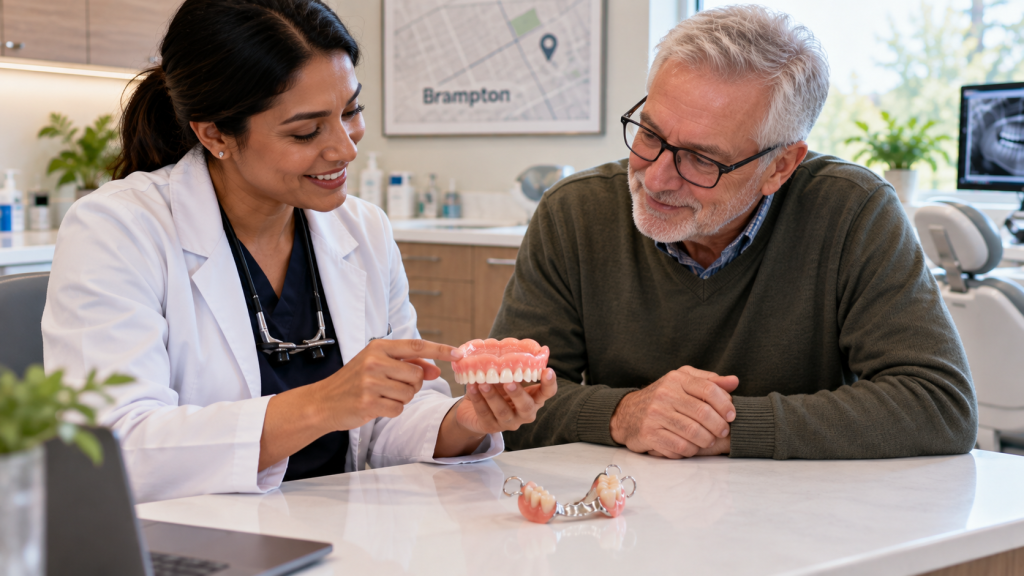
Complete dentures and partial dentures are used for different tooth replacement situations. Complete dentures are usually discussed when a full upper or lower arch of teeth needs to be replaced. Partial dentures are usually discussed when some natural teeth remain and a removable appliance may help fill the spaces left by missing teeth. The right option depends on the person’s oral health, remaining teeth, gums, comfort, function, and assessment.
For patients comparing dentures in Brampton, the first step is not choosing a denture type on your own. It is understanding what each option is designed to do, then asking a dentist or denturist which options may be appropriate after looking at your mouth, bite, gums, and goals.
What Is the Difference Between Complete and Partial Dentures?
The main difference between complete and partial dentures is how many teeth they are designed to replace. Complete dentures are used when a full set of upper or lower teeth needs to be replaced. Partial dentures are used when only some teeth are missing and some natural teeth are still present.
That sounds simple, but the decision is not based on the number of missing teeth alone. A dental professional may also consider where the missing teeth are, whether the remaining teeth are stable, how the gums and jaw support a denture, and how the replacement teeth need to function when chewing and speaking.
The Canadian Dental Association explains that dentures can be complete or partial, and that both types need daily care. That matters because dentures are not only about filling a gap. They also need to fit, function, and be maintained properly over time.
What Are Complete Dentures?
Complete dentures are removable appliances that replace a full arch of missing teeth. A complete denture may replace the upper teeth, the lower teeth, or both, depending on the patient’s situation.
A dentist or denturist may discuss complete dentures when a person no longer has natural teeth in an arch, or when remaining teeth are not able to support a different type of replacement plan. The conversation may include how the denture will sit against the gums, how it may affect chewing and speaking, and what the person should understand about daily care.
Complete dentures are not one-size-fits-all. Gum shape, jaw support, oral health, healing needs, and patient expectations can all affect the planning conversation. Some people may also need adjustments after the denture is made, because comfort and fit can change as the mouth changes.
What Are Partial Dentures?
Partial dentures are removable appliances that replace some missing teeth while natural teeth remain. A partial denture may be used to fill one or more spaces, depending on the location of the missing teeth and the health of the remaining teeth.
A partial denture may be discussed when the remaining natural teeth are stable enough to stay in place and the gums can support the appliance. The condition of those remaining teeth matters. If teeth are loose, damaged, decayed, or affected by gum disease, the treatment conversation may change.
Care is especially important with partial dentures because the patient still has natural teeth to protect. Food and plaque can collect around the denture and remaining teeth, so cleaning routines need to include both the appliance and the mouth.
How Might a Dentist or Denturist Compare Denture Options?
A dentist or denturist may compare complete and partial dentures by looking at the full picture, not just the gap. The goal is to understand which type of replacement may fit the patient’s mouth, needs, and long-term care requirements.
Which Factors May Be Used to Compare Denture Options?
- The number and location of missing teeth
- The health and stability of remaining natural teeth
- Gum condition and jaw support
- Bite, chewing needs, and speech concerns
- Fit, comfort, and adjustment needs
- Cleaning and maintenance routines
- Whether other dental services in Brampton may also be relevant
- The patient’s expectations, lifestyle, and comfort with removable appliances
This is also where the wording matters. A patient may search for a denturist because they are thinking about dentures specifically. A dentist may be involved in assessing oral health, remaining teeth, gums, or related treatment needs. The exact care path depends on the clinic, provider, and patient’s situation.
When Might Dental Implants Come Into the Conversation?
Dental implants may come into the conversation when a patient is asking about additional support for replacement teeth. Some people may hear about implant-supported dentures and wonder whether they are the same as regular dentures.
They are not the same. A traditional removable denture rests on the gums and surrounding oral structures. An implant-supported option involves dental implants, which are placed in the jawbone and may help support a denture or other tooth replacement option. Whether implants are worth discussing depends on several factors, including oral health, bone support, medical history, treatment goals, and a dental assessment.
This topic should stay secondary when comparing complete and partial dentures. For many patients, the first question is still: “What am I replacing, and what condition are my remaining teeth and gums in?” Once that is clear, a dentist can explain whether implant-supported options are relevant to discuss.
What Should You Ask Before Choosing Complete or Partial Dentures?
Patients do not need to arrive at an appointment already knowing which denture type they need. It is more useful to arrive with practical questions.
What Questions Should You Ask Your Dentist?
- Which teeth need to be replaced?
- Are any remaining teeth healthy enough to support a partial denture?
- Would complete or partial dentures be discussed in my situation?
- What should I know about fit and possible adjustments?
- How will I clean the denture and care for my gums or remaining teeth?
- Are implant-supported options worth discussing, or should I focus on removable dentures first?
- What should I expect after the denture is made?
- How often should my denture and oral health be checked?
These questions help keep the conversation practical. They also make it easier to understand why a dentist or denturist may recommend one path over another after an assessment.
Frequently Asked Questions About Complete and Partial Dentures in Brampton
Are complete dentures and partial dentures used for different situations?
Yes. Complete dentures are generally discussed when a full arch of teeth needs to be replaced, while partial dentures are generally discussed when some natural teeth remain. The right conversation depends on the patient’s oral health, remaining teeth, gums, and assessment.
Can a partial denture be used if I still have several natural teeth?
A partial denture may be discussed when several natural teeth remain, but those teeth need to be assessed. The health, strength, and position of the remaining teeth can affect whether a partial denture is appropriate.
Are implant-supported dentures the same as regular dentures?
No. Implant-supported dentures involve dental implants that may help support the denture. Traditional removable dentures do not use implants. Whether implant-supported options are worth discussing depends on the patient’s oral health and assessment.
How do I know which denture option is appropriate for me?
The most reliable way to understand denture options is to have your mouth, remaining teeth, gums, bite, and goals assessed. A dentist or denturist can explain which options may be appropriate and what factors should be considered before treatment planning.
Talk to My Smile Dentistry About Denture Options in Brampton
If you are comparing complete and partial dentures, you do not have to figure it out alone. My Smile Dentistry can help Brampton patients ask informed questions about denture options, oral health, and next steps.
You can contact My Smile Dentistry to ask about denture care, tooth replacement questions, or whether an assessment may help clarify which options are worth discussing for your situation.
