
When a tooth becomes damaged, decayed, cracked, or weakened, a dentist may recommend either a filling or a crown. The right choice depends on several factors, including how much of the tooth is affected, how much healthy tooth structure remains, where the tooth is located, and how much force it experiences during chewing. While fillings and crowns can both be used to restore teeth, they serve different purposes and are recommended for different situations.
Why the Right Tooth Restoration Matters
A damaged tooth does not always require the same type of treatment. Some teeth can be restored with a relatively small filling, while others may require a crown to provide additional support and protection.
The goal of treatment is not simply to repair a tooth’s appearance. Dentists also consider how well the tooth functions, whether it can withstand everyday chewing forces, and whether the restoration may help preserve the tooth over time.
For patients researching treatment options, understanding the difference between fillings and crowns can make conversations with a dentist easier and less stressful.
Many of these treatment decisions fall under restorative dentistry, which focuses on repairing and restoring teeth affected by decay, damage, wear, or other concerns.
What Is a Dental Filling?
A dental filling is a restoration used to repair a tooth that has been affected by decay, minor damage, or small areas of wear.
After the affected portion of the tooth is treated, the filling material is placed to restore the shape and function of the tooth. Fillings are commonly used when enough healthy tooth structure remains to support the restoration.
Dentists may recommend fillings for:
- Small to moderate cavities
- Minor chips
- Areas of wear
- Replacement of older fillings in some situations
Because fillings preserve much of the natural tooth structure, they are often considered when the damage is relatively limited.
However, a filling is not always the best solution. If too much of the tooth has been compromised, a larger restoration may be needed to provide additional strength.
What Is a Dental Crown?
A dental crown is a restoration that covers and protects a larger portion of a tooth.
Unlike a filling, which repairs a specific area, a crown is designed to fit over the visible portion of the tooth after it has been prepared by the dentist.
Crowns may be recommended when a tooth has experienced significant damage, contains a large existing filling, has become weakened over time, or is at increased risk of breaking.
A crown may also be considered when a tooth requires additional structural support following treatment or when a dentist determines that a filling alone may not provide adequate protection.
Every situation is unique. The decision to recommend a crown depends on the condition of the tooth and the goals of treatment rather than a single rule that applies to everyone.
Dental Crown vs Filling: How Dentists Decide
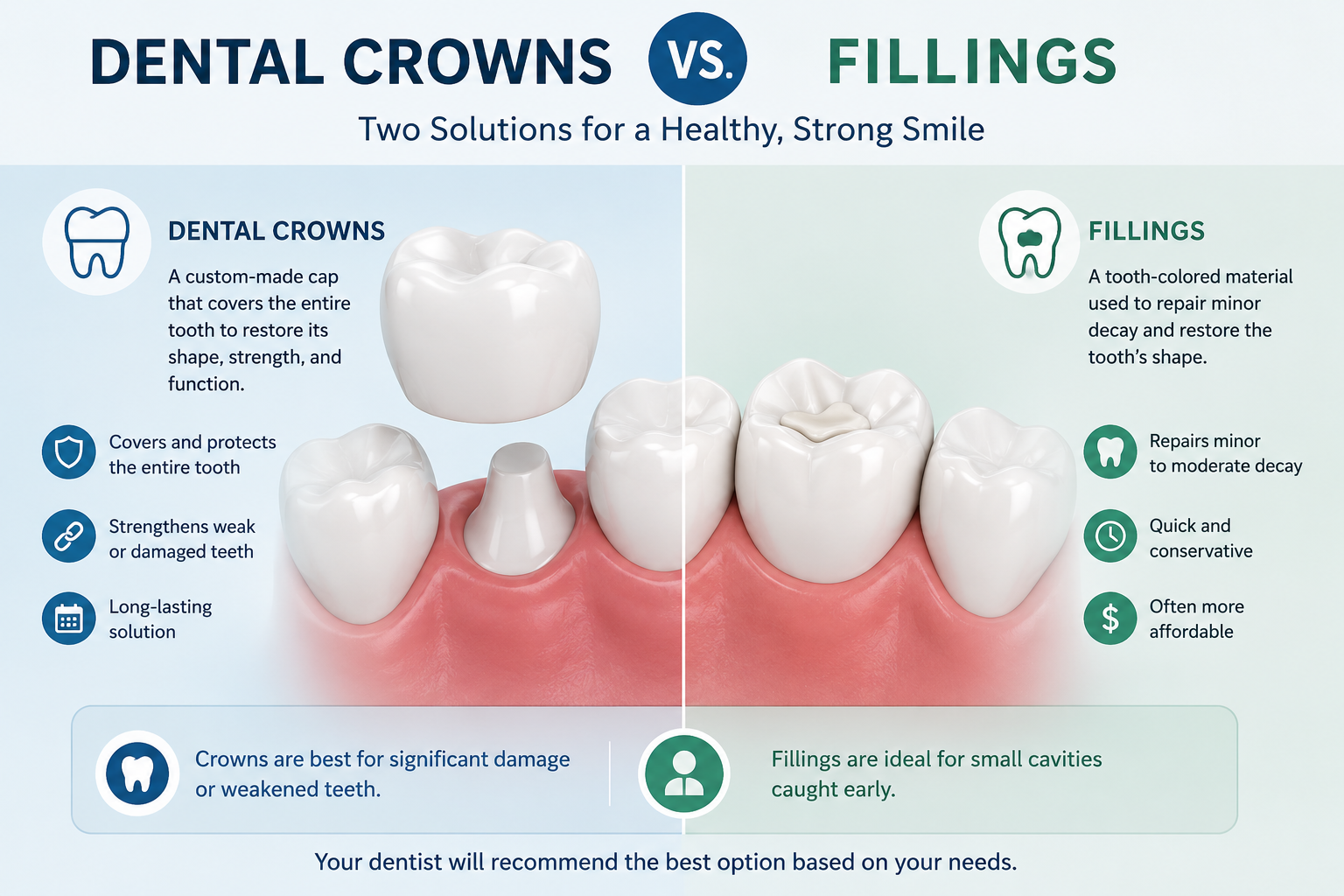
The choice between a crown and a filling is based on a careful assessment of the tooth rather than patient preference alone.
One of the first considerations is the size of the cavity or damaged area. Smaller areas of damage can often be restored with a filling, while larger areas may require a crown for additional coverage and support.
Dentists also look closely at how much healthy tooth structure remains. A tooth that still has substantial natural structure may respond well to a filling. If much of the tooth has been lost, a crown may be recommended to help reinforce it.
Location matters as well. Back teeth are exposed to significant chewing pressure every day. Because of these forces, some teeth may require more protection than others depending on their position in the mouth.
Cracks and fractures are another important factor. Even if a tooth is not currently broken, signs of structural weakness may influence treatment recommendations. The goal is often to reduce the risk of further damage where possible.
Existing dental work is also considered. A tooth with a large filling that has been repaired multiple times may be evaluated differently than a tooth receiving treatment for the first time.
Symptoms provide valuable information as well. Pain, sensitivity, discomfort when biting, or changes in how a tooth feels can all help guide the decision-making process.
Cosmetic and functional goals may also be discussed. Some patients are primarily concerned with preserving function, while others are also interested in how a restoration will affect the appearance of their smile.
| Consideration | Filling | Crown |
| Size of Damage | Smaller areas | Larger areas |
| Remaining Tooth Structure | More natural tooth remains | Less natural tooth remains |
| Chewing Pressure | Depends on location | May be recommended for additional support |
| Cracks or Fractures | Suitable in some situations | May be considered when more protection is needed |
| Existing Dental Work | Often used for smaller restorations | May be considered for heavily restored teeth |
| Symptoms | Depends on the condition of the tooth | Depends on the condition of the tooth |
| Cosmetic and Functional Goals | Case dependent | Case dependent |
A dental examination is the best way to determine which option may be appropriate for your specific situation. A recommendation is typically based on the overall condition of the tooth rather than any single factor.
Signs Your Tooth Should Be Checked Soon
Some dental concerns develop gradually, while others appear suddenly. A small chip, mild sensitivity, or occasional discomfort may not seem urgent at first, but these symptoms can sometimes indicate an underlying issue that should be evaluated.
You may want to schedule a dental appointment if you notice:
- A chipped or cracked tooth
- Sensitivity to hot, cold, or sweet foods
- Pain when biting or chewing
- A filling that feels loose or damaged
- A tooth that appears worn down
- Visible decay or dark areas on a tooth
- Ongoing discomfort that does not improve
Not every symptom means a crown or filling is required. However, early evaluation can help identify problems before they become more extensive.
Certain symptoms may require more urgent attention. Severe tooth pain, significant swelling, dental trauma, bleeding, or signs of infection should not be ignored. In these situations, contacting an emergency dentist in Brampton may be appropriate to determine the next steps.
Many patients wait because they hope the problem will resolve on its own. While minor sensitivity can have different causes, persistent symptoms are generally worth discussing with a dental professional.
What to Expect at a Restorative Dentistry Appointment
Patients often arrive at an appointment expecting to be told they need a specific treatment. In reality, the first step is usually understanding the condition of the tooth.
A dentist will typically examine the affected area, discuss your symptoms, review your dental history, and may recommend diagnostic imaging if needed.
The purpose of this assessment is to determine:
- The extent of damage or decay
- How much healthy tooth structure remains
- Whether the tooth appears stable
- Whether a filling, crown, or another treatment option may be appropriate
In some cases, the tooth may be suitable for a filling. In others, a crown may provide additional protection and support. The recommendation depends on the findings from the examination rather than a predetermined approach.
Occasionally, a tooth may be too severely damaged to be restored predictably. When that occurs, your dentist may discuss alternative options, which can sometimes include dental implants or other tooth-replacement solutions depending on the situation.
The goal of the appointment is to provide information, answer questions, and help you understand the available treatment options.
Dental Crowns and Fillings FAQs
Is a crown better than a filling?
Not necessarily.
A crown and a filling serve different purposes. A filling may be appropriate when a smaller portion of the tooth requires repair, while a crown may be recommended when additional coverage or support is needed.
The best option depends on the condition of the tooth and the findings from a dental examination.
Can a large filling be replaced with another filling?
Sometimes, but not always.
The answer depends on factors such as the size of the existing filling, the amount of healthy tooth structure remaining, and the overall strength of the tooth. A dentist can assess whether another filling is appropriate or whether a different restoration should be considered.
Does a cracked tooth always need a crown?
No.
Some cracks are minor, while others may affect the long-term stability of the tooth. Treatment recommendations depend on the location and severity of the crack, as well as any symptoms that may be present.
What happens if I wait too long to fix a damaged tooth?
Dental concerns do not always worsen quickly, but delaying treatment can sometimes allow damage to progress.
A small issue may become more complicated over time, which is why it is generally a good idea to have concerns evaluated rather than waiting until symptoms become more severe.
How do I know if tooth pain is urgent?
Tooth pain should be evaluated if it is persistent, worsening, or interfering with daily activities.
Severe pain, swelling, infection, trauma, or bleeding may require more immediate attention. If you are unsure about the urgency of your symptoms, contacting a dental office can help you determine the appropriate next step.
Booking Care for a Damaged Tooth in Downtown Brampton
If you have a tooth that feels weak, damaged, sensitive, or painful, an examination can help determine what may be causing the problem and which treatment options may be appropriate.
Some teeth can be restored with a filling, while others may benefit from a crown or another restorative treatment. The right recommendation depends on the condition of the tooth, your symptoms, and the findings from a professional assessment.
My Smile Dentistry is located in downtown Brampton at 98 Queen Street West and provides care for patients seeking guidance about damaged, worn, cracked, or decayed teeth.
If you would like to discuss your concerns or learn more about your treatment options, contact My Smile Dentistry for an assessment and take the next step toward restoring the health and function of your smile.
