
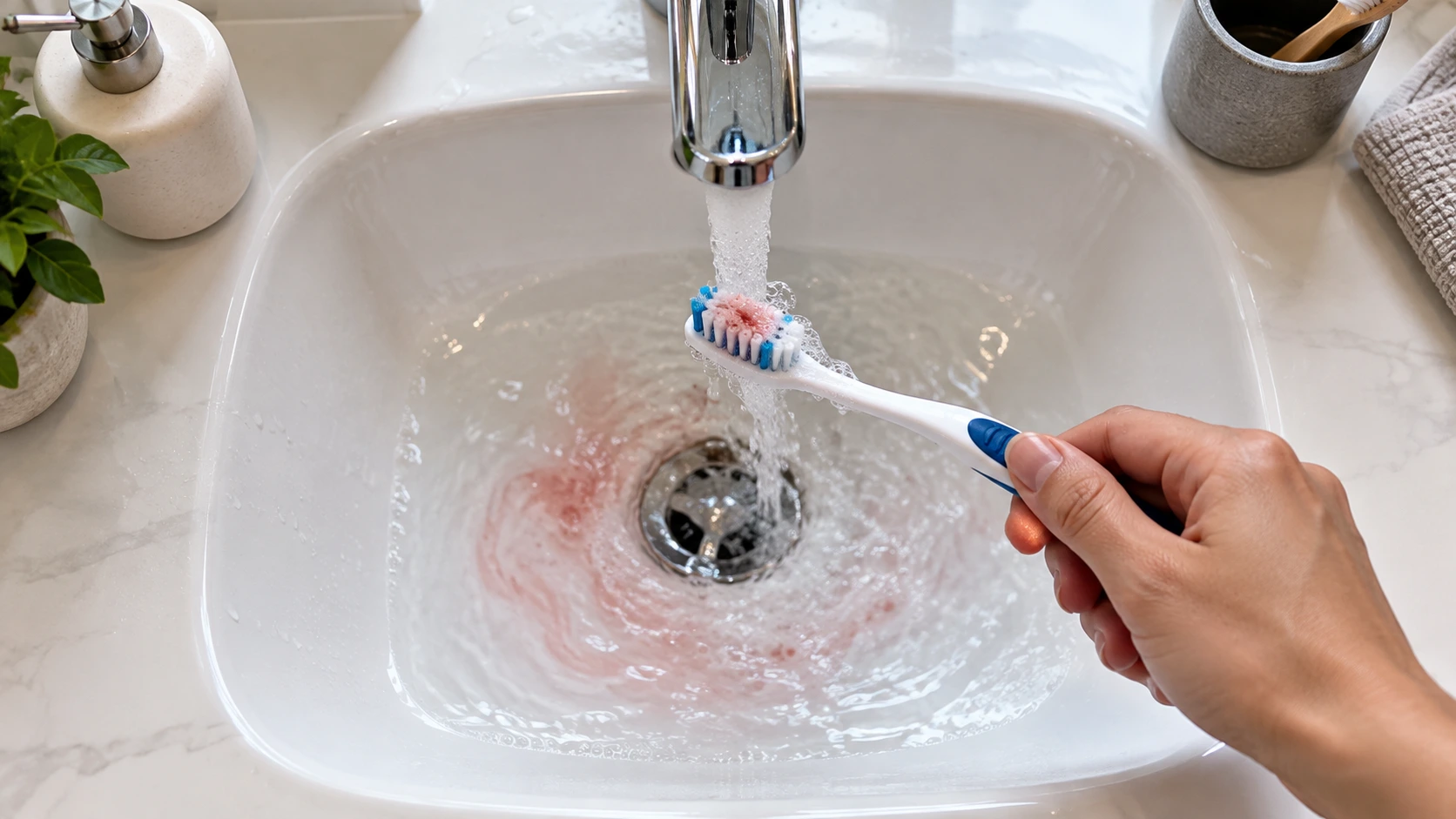
 Noticing blood in the sink after brushing is unsettling. Most people assume they brushed too hard, rinse, and move on. Sometimes that’s true. But if you notice your gums bleeding when brushing regularly, your gums are trying to tell you something worth paying attention to.
The good news: bleeding gums are one of the most common dental concerns, and in most cases, they’re also one of the most treatable. The key is understanding what’s actually causing it so you know whether a small change to your routine will fix it or whether it’s time to call your dentist.
Here’s what you need to know: bleeding gums are almost always caused by inflammation from plaque buildup, which means they’re preventable and, in the early stages, reversible. But left alone, that inflammation can progress into something more serious.
This guide covers the most common causes, what you can do at home, and the signs that it’s time to get a professional opinion from a family dentist in downtown Brampton.
Key Takeaways
- The most common cause is gingivitis, an early and reversible form of gum disease caused by plaque buildup.
- Brushing too hard, starting a new flossing routine, pregnancy, and certain medications can also trigger bleeding.
- Improved brushing and flossing typically reduces bleeding within two to four weeks if gingivitis is the cause.
- See a dentist if bleeding persists beyond three weeks, or if you notice recession, loose teeth, or persistent bad breath.
- My Smile Dentistry offers direct insurance billing and participates in the Canadian Dental Care Plan (CDCP).
The Most Common Reasons Your Gums Bleed
Bleeding gums rarely happen for just one reason. In most cases, it comes down to one of these causes, sometimes a combination.
Gingivitis: The Most Likely Culprit
Gingivitis is the early stage of gum disease, and it’s the number one reason gums bleed during brushing. It develops when plaque, the sticky film of bacteria that forms on your teeth, builds up along the gumline and isn’t fully removed through brushing and flossing.
That plaque irritates the gum tissue, causing it to become inflamed, swollen, and prone to bleeding. The Canadian Dental Association notes that gum disease is extremely common among Canadian adults, and many people don’t realize they have it because it’s often painless in the early stages.
The important thing to know about gingivitis: it’s reversible. The Ontario Dental Association confirms that with improved home care and a professional cleaning, your gums can return to full health.
Brushing Too Hard or With the Wrong Toothbrush
Aggressive brushing is a surprisingly common cause of bleeding gums. Using a hard-bristled toothbrush or scrubbing back and forth with too much pressure can damage the delicate gum tissue along the gumline.
If you’ve recently switched to a new toothbrush or changed your brushing technique, that could explain sudden bleeding. The fix is simple: switch to a soft-bristled brush and use gentle, circular motions rather than horizontal scrubbing.
You Just Started Flossing (or Restarted)
If your gums bleed when you floss but not when you brush, and you haven’t flossed in a while, this is normal. Gum tissue that isn’t used to being cleaned between the teeth will bleed at first. According to the American Dental Association’s MouthHealthy resource, this usually resolves within about a week of consistent flossing as the gums tighten and strengthen.
If the bleeding continues past two weeks of daily flossing, it’s worth mentioning to your dentist.
Hormonal Changes
Pregnancy, menstruation, and hormonal shifts can all make gum tissue more sensitive and more reactive to plaque. Pregnancy gingivitis is a recognized condition where hormone changes cause the gums to become inflamed and bleed more easily, even with a good oral hygiene routine. If you’re pregnant and noticing gum changes, let your dentist know at your next visit.
Medications and Underlying Health Conditions
Certain medications, particularly blood thinners like aspirin or warfarin, can make gums bleed more easily and for longer. If you’ve recently started a new medication and noticed a change in your gums, that connection is worth flagging with both your doctor and your dentist.
Less commonly, bleeding gums can be linked to vitamin C or vitamin K deficiency, or in rare cases, blood disorders. MedlinePlus lists these as less frequent causes. They should be ruled out if bleeding is persistent and doesn’t respond to improved oral hygiene.
| Cause | How Common | Typical Fix |
|---|---|---|
| Gingivitis / plaque buildup | Very common | Improved brushing, flossing, professional cleaning |
| Brushing too hard | Common | Soft-bristled brush, gentler technique |
| New flossing routine | Common | Consistent daily flossing for 1-2 weeks |
| Hormonal changes | Moderate | Dental monitoring, especially during pregnancy |
| Blood-thinning medications | Moderate | Discuss with your doctor and dentist |
| Vitamin deficiency | Less common | Dietary adjustment or supplementation |
| Underlying health condition | Rare | Medical evaluation |
What You Can Do at Home
If your gums are bleeding occasionally and you don’t have other symptoms, improving your daily routine is the right starting point. Four changes make the biggest difference:
Upgrade Your Brushing Technique
Most people brush too hard and not long enough. Aim for two minutes, twice a day, using a soft-bristled toothbrush held at a 45-degree angle to the gumline. Use small circular strokes rather than back-and-forth scrubbing. If your bristles are flattening out within a month or two, you’re pressing too hard.
An electric toothbrush can help here. Many have built-in pressure sensors that alert you when you’re overdoing it.
Floss Every Day, Without Skipping
Flossing removes plaque from between the teeth where your toothbrush simply can’t reach. If you’re not flossing daily, that’s almost certainly contributing to the problem. Slide the floss gently into the space between each tooth and curve it around the base of the tooth before pulling it back out. Don’t snap it into the gums.
If traditional floss is difficult to use, interdental brushes or a water flosser are good alternatives.
Try a Saltwater Rinse
A simple saltwater rinse can reduce bacteria in the mouth and soothe inflamed gum tissue. Dissolve half a teaspoon of salt in a glass of warm water, swish for 30 seconds, and spit. Doing this once or twice a day gives irritated gums a chance to settle while you work on improving your brushing and flossing routine.
Watch Your Diet and Lifestyle Habits
- Sugary and starchy foods feed the bacteria that produce plaque. Cutting back helps.
- Smoking significantly increases the risk of gum disease and can mask bleeding by reducing blood flow to the gums. Smokers sometimes don’t notice a problem until it’s already advanced.
- Vitamin C plays a role in gum health. If your diet is low in fruits and vegetables, it’s worth looking at that.
A realistic timeline: If gingivitis is the cause, consistent brushing and flossing improvements typically reduce bleeding within two to four weeks. If you’re not seeing improvement by then, it’s time to see your dentist.
When Bleeding Gums Need Professional Attention
Home care handles a lot, but there are situations where a dentist needs to be involved. Don’t wait if any of the following apply:
- Bleeding for 2-3+ weeks despite consistent brushing and flossing
- Unprovoked bleeding not triggered by brushing or flossing
- Gum recession where teeth appear longer than they used to
- Persistent bad breath that doesn’t improve with brushing
- Dark red or purple gums rather than a healthy pink
- Loose or shifting teeth
- Pain or swelling in the gum tissue
- Heavy bleeding that takes a long time to stop
These are signs that gingivitis may have progressed to periodontitis, a more serious form of gum disease that affects the bone and tissue supporting your teeth. Health Canada’s overview of gum disease notes that periodontitis damage is not usually reversible. Early intervention is what makes the difference. At that stage, professional treatment is needed, not just better brushing.
What does that treatment look like? For most patients, it starts with a thorough professional cleaning called scaling, where a dental hygienist removes the hardened plaque (tartar) that can’t be removed at home. In more advanced cases, a deeper cleaning procedure called scaling and root planing may be recommended. Your dentist can assess exactly what’s needed and walk you through the options.
If you’re dealing with a dental infection alongside your gum symptoms, that’s a situation to address promptly. The team at My Smile Dentistry offers emergency dental care in Brampton for situations that can’t wait for a routine appointment.
How a Dentist Diagnoses the Cause
When you come in with concerns about bleeding gums, your dentist won’t just look at your gums in isolation. A proper assessment covers four areas.
Review of Your Oral Hygiene Habits
Your dentist will ask about your brushing and flossing routine, any recent changes to your diet, and medications you’re taking. This context helps narrow down what’s driving the bleeding before the physical exam even begins.
Visual Examination of the Gum Tissue
The dentist checks for redness, swelling, recession, and pocket depth, the space between the tooth and gum. Changes in colour or tissue texture are early indicators of how far inflammation has progressed.
Probing Measurements
A small instrument is used to measure how deep the pockets around each tooth are. Pocket depth is one of the clearest indicators of gum disease severity and guides the treatment recommendation.
X-Rays
If bone loss is suspected, X-rays give a clearer picture of what’s happening below the gumline. This step is not always needed, but it’s standard when pockets are deeper than expected or when symptoms suggest more advanced disease.
What Happens After the Exam
This is also a good time to mention any other symptoms you’ve noticed, including tooth sensitivity, changes in how your bite feels, or any loose teeth. The more context your dentist has, the more targeted the treatment plan can be.
If untreated gum disease has led to damage that needs to be addressed, restorative dental treatments such as crowns or other procedures may be part of the longer-term plan. But the starting point is almost always getting the gum inflammation under control first.
Questions Brampton Patients Ask About Bleeding Gums
Can bleeding gums be a sign of something serious beyond gum disease?
In most cases, bleeding gums point to gingivitis or a mechanical issue like brushing too hard. Less commonly, they can be associated with vitamin deficiencies, blood-thinning medications, or, rarely, systemic health conditions. If your gums bleed persistently and you’ve already improved your oral hygiene routine, it’s worth getting a professional evaluation to rule out other contributing factors.
My gums only bleed when I floss. Do I still need to see a dentist?
If you’ve recently started or restarted flossing, some initial bleeding is normal and typically settles within one to two weeks. If the bleeding continues beyond that, or if it’s accompanied by pain, swelling, or bad breath, yes, book an appointment. Bleeding when flossing is often an early sign of gum inflammation that’s easier to treat sooner rather than later.
Does direct insurance billing make it easier to get this checked out in Brampton?
My Smile Dentistry offers direct insurance billing and participates in the Canadian Dental Care Plan (CDCP), which can significantly reduce or eliminate out-of-pocket costs for eligible patients. If cost has been a reason for putting off a visit, it’s worth calling to ask about your coverage before assuming it’s too expensive.
How often should I be coming in for cleanings if my gums bleed regularly?
For patients with a history of gum disease or recurring bleeding, most dentists recommend professional cleanings every three to four months rather than the standard six. This more frequent schedule prevents plaque and tartar from reaching the level that triggers inflammation. Your dentist will set a schedule based on what they find during your exam.
Can bleeding gums lead to tooth loss if I ignore them?
Yes, they can. Gingivitis that goes untreated can progress to periodontitis, which damages the bone and connective tissue that hold teeth in place. Tooth loss is a real outcome of advanced, untreated gum disease. The encouraging part is that catching it early, even at the bleeding-gums stage, means the damage is often fully reversible with proper care.
Book an Appointment With a Downtown Brampton Family Dentist
Bleeding gums are common, but they’re not something to brush off indefinitely. If improving your home routine hasn’t made a difference within a few weeks, or if you’re noticing any of the warning signs mentioned above, the right move is a professional assessment.
My Smile Dentistry is located at 98 Queen Street West in downtown Brampton and offers morning, evening, and Saturday appointments to work around your schedule. The team accepts most insurance plans, offers direct billing, and participates in the Canadian Dental Care Plan.
Book an appointment online or call (905) 457-4445 to get your gums checked and find out exactly what’s going on.
